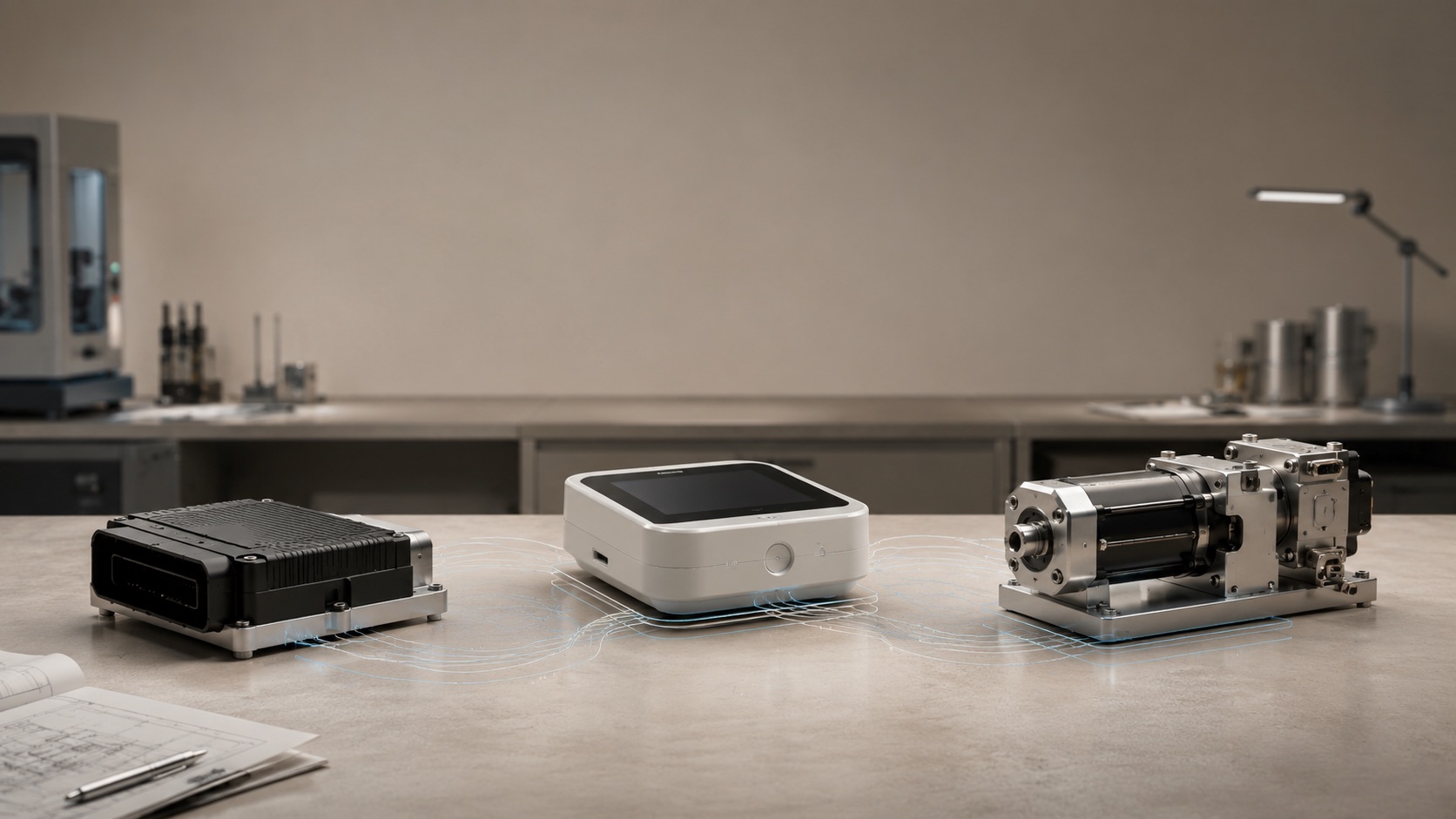
Model-Based Design is a method that allows systems to be designed and tested through digital models that simulate their behavior before implementation.
In this way, it is possible to anticipate verification activities, analyze design choices, and make decisions already in the early stages of development.
Compared to traditional processes, where design, development, and validation are often separated, this approach integrates all phases into a continuous workflow. Models become the reference point throughout the entire development lifecycle: from requirements definition to code generation.
In recent years, Model-Based Design has expanded its role, evolving from a tool for algorithm development into a method for designing complex and integrated systems.
The increase in complexity – with systems becoming increasingly software-defined, connected, and interdependent – has made it necessary to adopt an approach capable of managing multiple levels simultaneously: requirements, architectures, software, and physical components.
In this context, Model-Based Design integrates more closely with Model-Based Systems Engineering, contributing to a unified vision of development.
At the same time, the evolution of technologies is also transforming the role of models: from simulation tools into dynamic elements capable of supporting real-time decision-making through integration with artificial intelligence and digital twins.

We have been adopting Model-Based Design for more than twenty years, supporting its evolution through the projects developed over the years.
From the first activities focused on algorithm modeling and simulation, we have progressed to managing the entire development lifecycle, up to the generation of certifiable software and the validation of complex systems, including safety-critical contexts.
Today, we integrate Model-Based Design with an increasingly system-oriented approach, where requirements, architectures, and software development are continuously connected. This evolution, aligned with Model-Based Systems Engineering, allows us to tackle increasingly complex projects while maintaining consistency and control throughout the entire process.
The experience gained across different fields – from mobility to industrial technologies and connected devices – allows us to adapt this approach to different contexts, maximizing its potential according to each project’s objectives.

The value of Model-Based Design emerges from its ability to anticipate verification activities and distribute validation throughout the entire development lifecycle.
This makes it possible to:
- identify critical issues earlier
- reduce dependence on physical prototypes
- improve software quality
- ensure greater control in complex projects
In safety-critical contexts, moreover, this approach facilitates compliance with standards and certification requirements, making processes more traceable and reliable
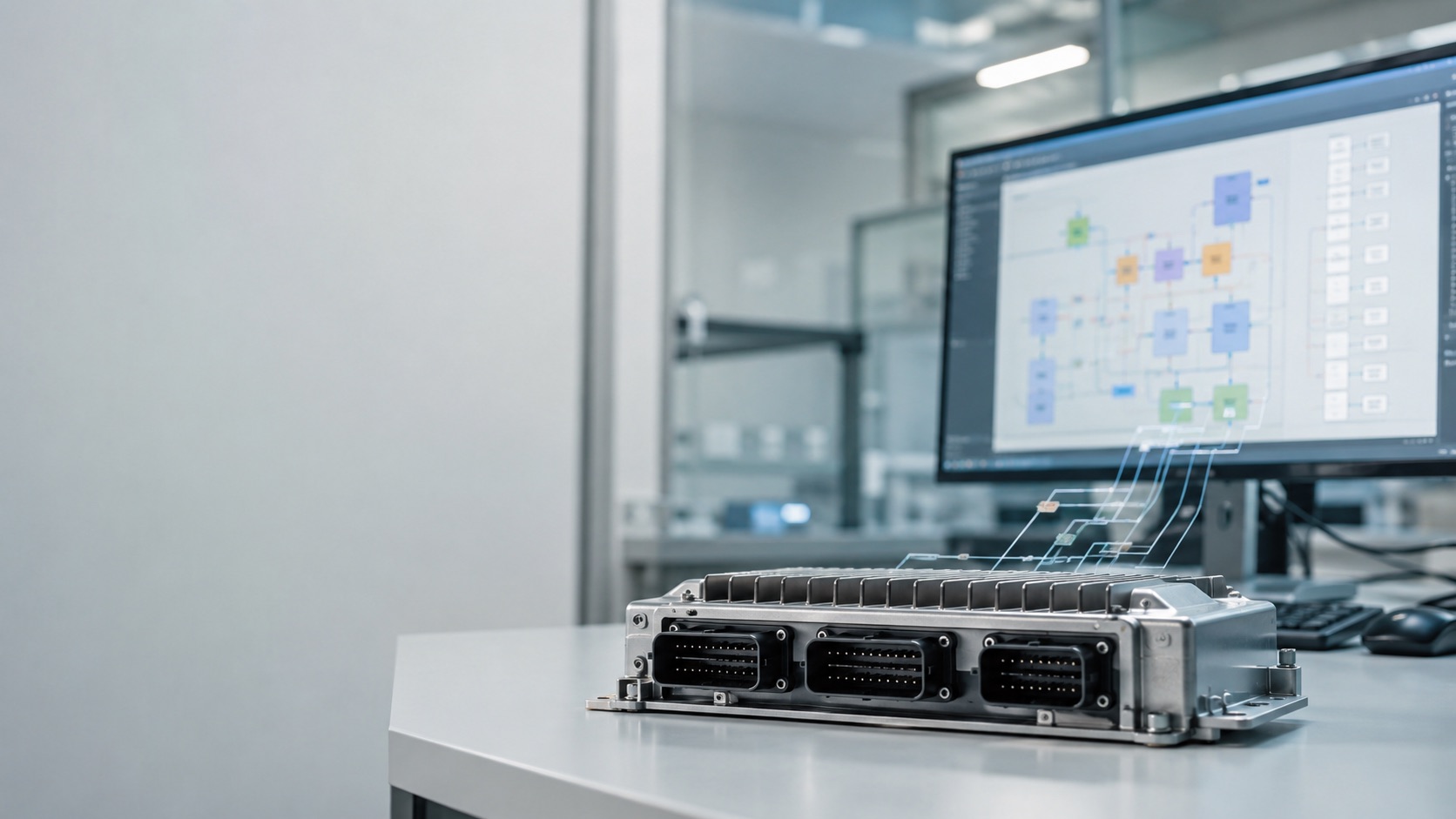
Today, Model-Based Design is at the core of the development of many systems that are part of everyday life, even when it is not visible.
From control systems in electric and autonomous vehicles to energy management in household appliances, as well as medical devices and industrial machines, models make it possible to design complex behaviors and validate them before physical implementation.
Each context requires different needs: reading speed, clarity of information, continuity of operation, integration with the system, and the ability to adapt to operating conditions. For this reason, designing an HMI means finding a balance between system behavior, technological constraints, and user experience.