
Embedded Software is software integrated into a device or electronic system. It is what allows a product to function, react to events, and perform the functions it was designed for.
It is present in many technologies used in everyday life and industry: vehicles, industrial machines, medical devices, household appliances, sensors, control units, and connected systems. It often remains invisible to those using the product, yet it governs essential functions: from executing a command to reading data, from activating a motor to displaying an alert at the right moment.
Its role is to enable software and hardware to communicate. It reads data from sensors, controls the physical parts of the system, manages signals, communicates with other devices, and responds in real time.
Unlike software designed exclusively for digital use, embedded software operates under very specific constraints, optimizing memory, energy, and computing power. It must comply with defined response times. It must be stable, because it often controls functions that are critical for the safety, quality, and reliability of the product.
For this reason, it requires method, precision, and a deep understanding of the system in which it operates.
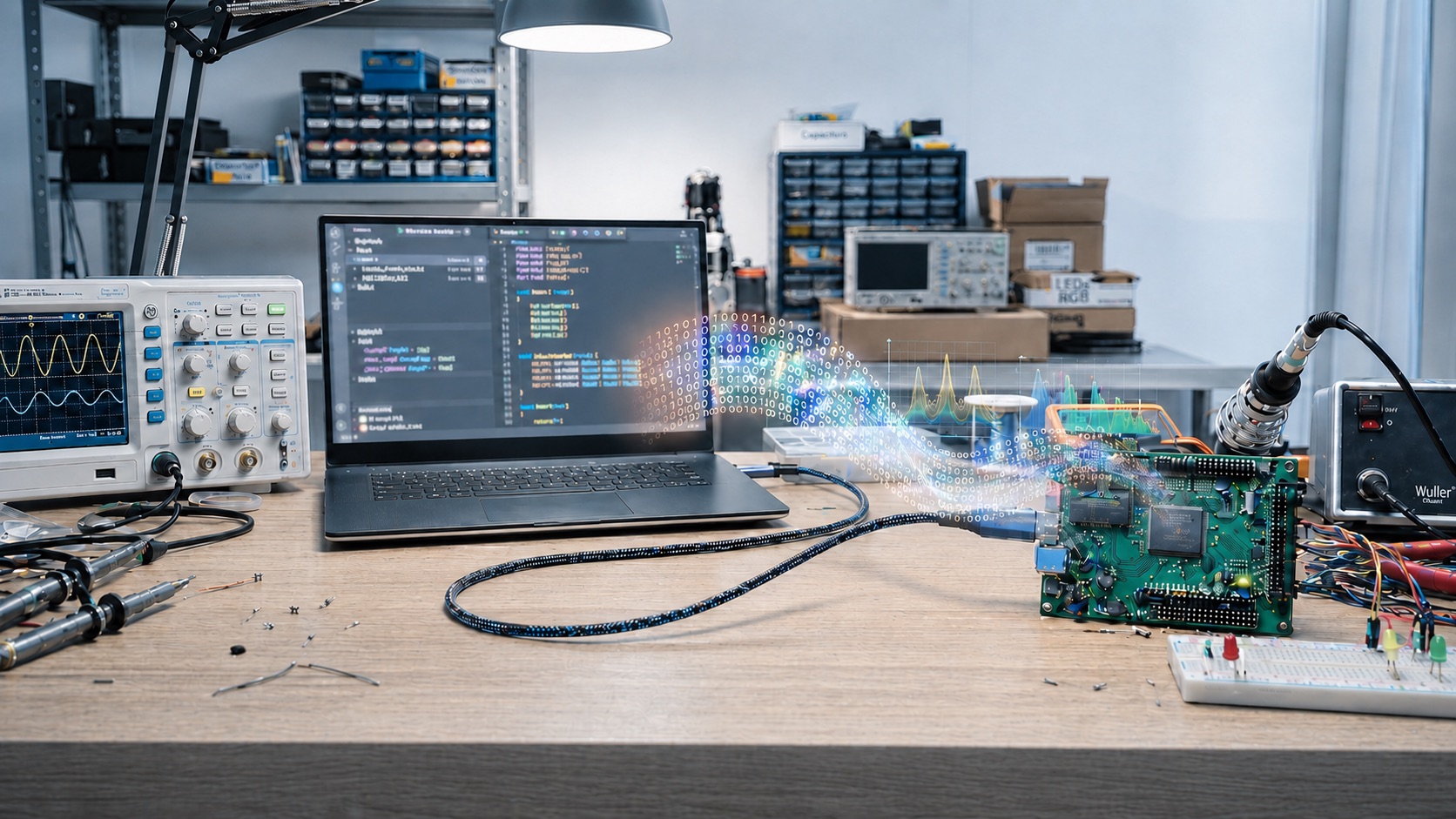
In recent years, Embedded Software has evolved from a local control component into an integral part of connected, intelligent, and distributed systems. Today it manages increasingly complex functions: communication between devices, remote updates, cybersecurity, advanced interfaces, and artificial intelligence executed directly on the device.
The technologies used in embedded development are also changing. With Edge AI, data processing takes place directly on devices, making applications more autonomous and responsive. At the same time, the growing connection between products and infrastructures makes cybersecurity a design requirement from the earliest development stages.
New hardware architectures such as RISC-V, safety-oriented programming languages like Rust, real-time and open-source operating systems, and multicore platforms make development more flexible, modular, and scalable.
These trends reveal a clear transformation: embedded software is no longer an isolated component, but an integrated part of the entire system architecture. It must communicate with networks, cloud platforms, applications, sensors, and other devices while ensuring performance, reliability, and security.
In this context, developing embedded software means designing solutions capable of operating in complex environments, with specific constraints related to performance, energy consumption, safety, reliability, and integration.
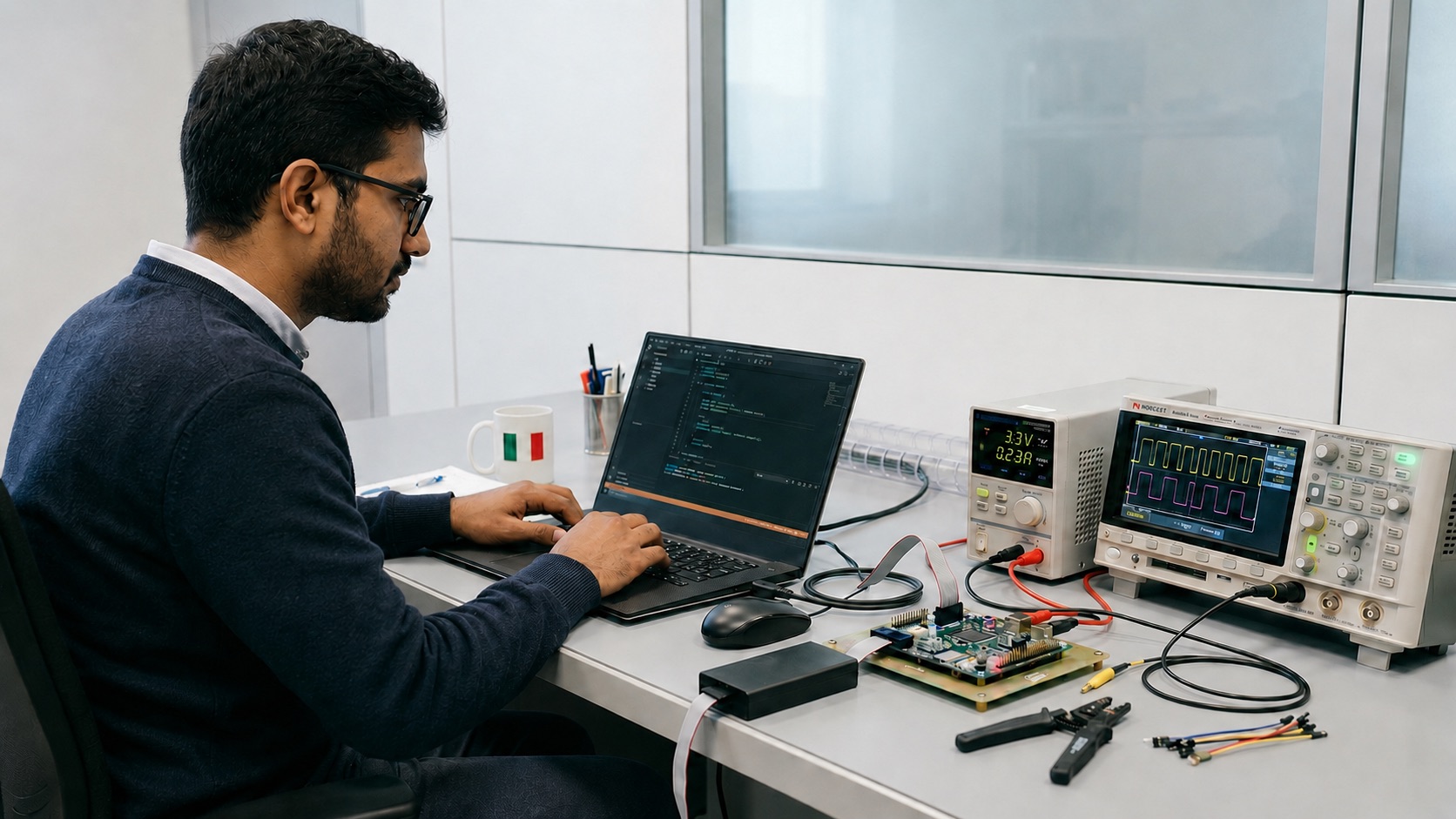
We work on systems in which software and hardware must be designed together from the earliest project stages. We start from requirements, architecture, and usage context to define operating logic, develop code, integrate the different software layers, and verify system behavior.
Our work may involve the software closest to the hardware, such as drivers and firmware, as well as application and integration layers. Drivers allow software to communicate with sensors, displays, control units, and other physical parts of the system. Firmware manages the device basic functions and enables startup and correct operation. Middleware, on the other hand, connects different software layers and provides shared functions such as communication, diagnostics, or data management.
In projects, we may work on microcontrollers, small computing systems integrated into devices, and on electronic control units that manage specific functions in a vehicle, an industrial machine, or another complex system. We also develop on embedded Linux systems, meaning Linux versions adapted to dedicated devices and products, on AUTOSAR architectures, mainly used in automotive to organize software development in a modular way, and on real-time environments designed to respond within precise timing constraints when delays may affect operation.
Teoresi experience integrates manual development, model-based approaches, code generation, testing, and validation. This allows us to work on software at multiple levels: from the layer that communicates directly with the hardware to application functions. System behavior is verified through progressive testing, up to bench testing, where the software is validated under conditions close to real ones.
This approach allows software to be adapted to the system in which it must operate. The result is stable, controlled embedded software ready to work inside real products.
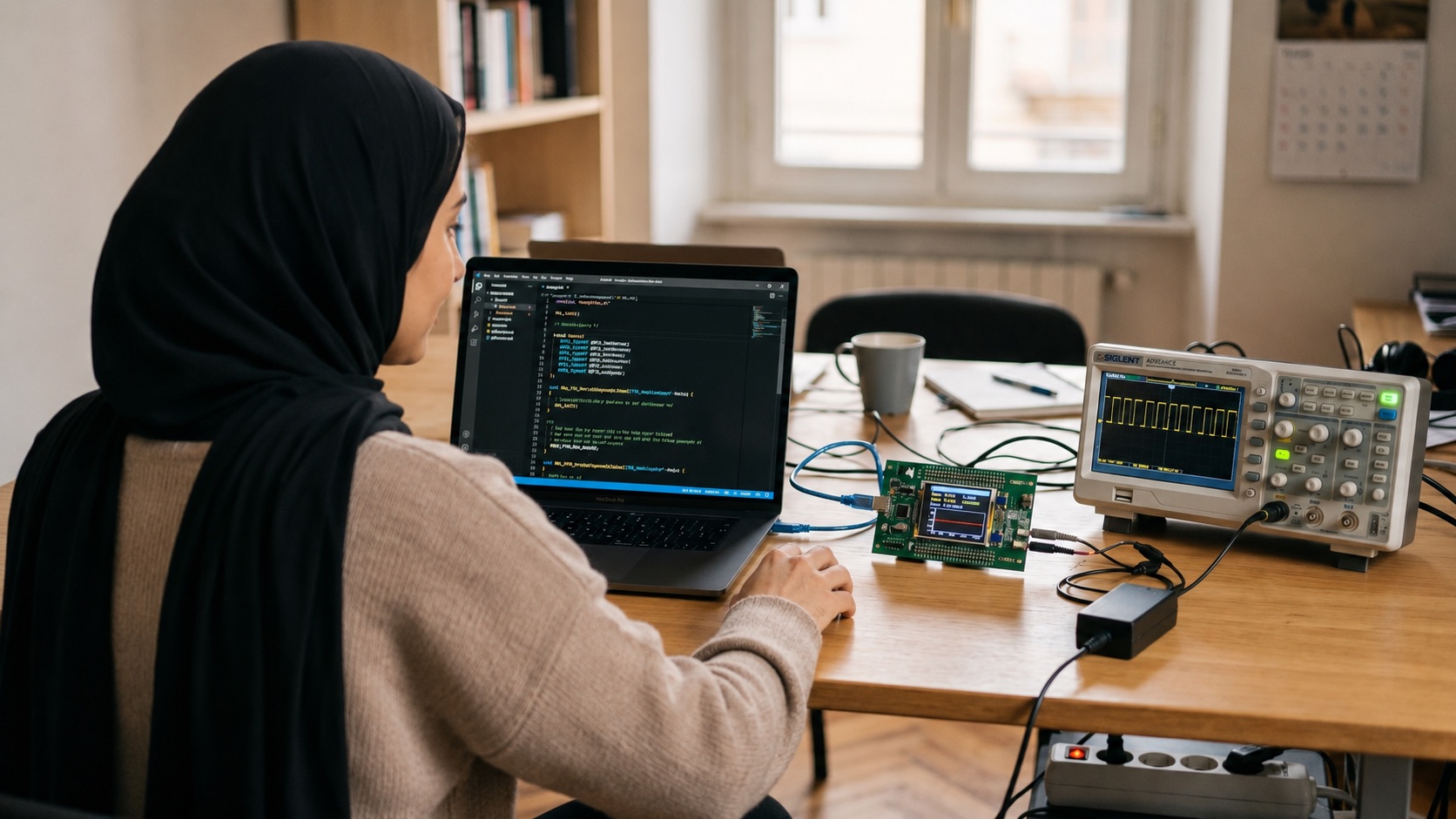
Il software embedded controlla ciò che accade nel dispositivo. Riceve informazioni dai sensori, elabora dati, attiva funzioni, gestisce errori e comunica con altri sistemi. Per questo è una parte essenziale dell’architettura.
Un software embedded efficace permette di:
- integrate software and hardware
- control system behavior
- manage data and signals in real time
- improve reliability and safety
- reduce the risk of errors
- make the system updateable and more flexible
In complex systems, this central role increases. Every function must communicate with many others. Every software choice can affect performance, energy consumption, safety, maintenance, and the quality of the final product.

Embedded Software is applied in very different contexts, but with common needs: ensuring operational continuity, managing real-time data and signals, and integrating hardware, software, and communication components within increasingly connected systems.
In automotive, it supports the evolution toward software-defined vehicles, where many functions depend on software. In industry, it contributes to the development of machines capable of collecting data, communicating with other systems, and adapting to operating conditions. In IoT devices, it connects sensors, networks, cloud platforms, and applications, allowing products to exchange information and evolve over time.
In all these areas, embedded software contributes to making systems more autonomous, integrated, and reliable.