
Model-Based Systems Engineering, or MBSE, is an approach that enables complex systems to be designed and managed through digital models.
These models represent the functional, logical and physical architectures associated with the requirements that define the system of interest and its interactions with the surrounding environment. They therefore become a shared reference for everyone involved in design, development, testing and validation.
Compared with a process based solely on documents, MBSE makes it possible to connect information in a more structured way. Each requirement can be linked to the relevant model, test, result and documentation.
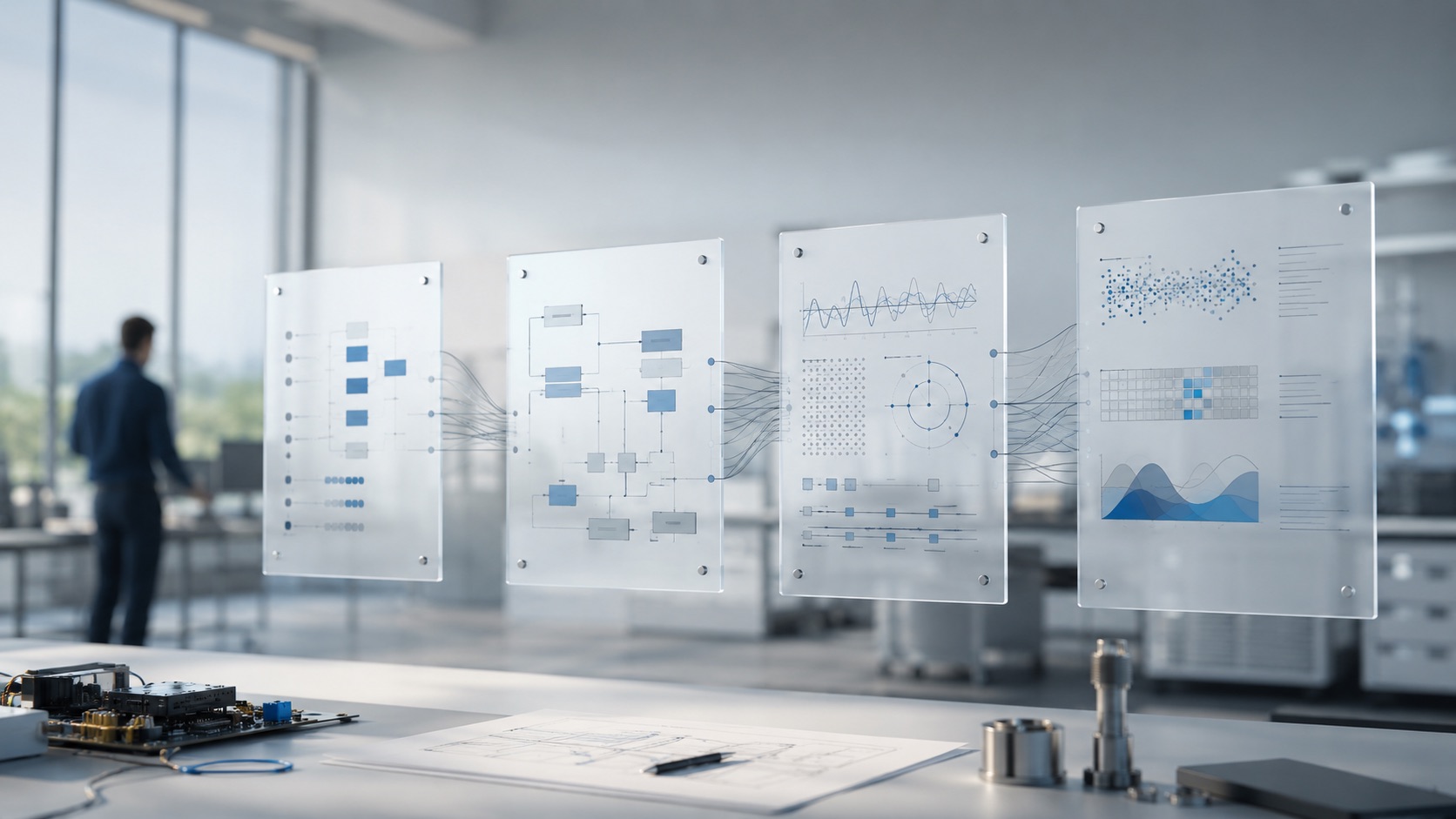
In recent years, MBSE has become increasingly important in the development of software-defined, connected and interdependent systems.
The complexity of today’s projects requires tools and methods capable of connecting requirements, architectures, software, hardware and testing within a single workflow.
For this reason, MBSE is no longer used only to represent a system. It also helps govern its development, manage changes and support validation.
In this context, integration with Application Lifecycle Management platforms makes it possible to maintain traceability between requirements, models, tests, change requests and results.

At Teoresi, the model-based approach developed from our experience in designing, simulating and validating software for integrated systems.
Over time, our work has expanded from the technical modelling of system behaviour to higher levels of abstraction, becoming part of a broader development workflow.
Today, we use MBSE and MBD, Model-Based Design, in projects across different industrial sectors, applying techniques and tools in line with industry-specific methodologies and standards.

The value of MBSE lies in its ability to maintain continuity between requirements, architecture, development and validation.
This makes it possible to::
- represent the system in a structured way
- connect requirements, behavioural models, code and tests
- perform verification activities earlier in the process
- assess the impact of changes
- improve collaboration between teams
- support audits and certification processes
In safety-critical environments, traceability is particularly important because it makes it possible to demonstrate how a requirement has been implemented, verified and validated.

MBSE is useful in every field where systems, software, hardware and requirements need to evolve together.
It can be applied to the development of electric and connected vehicles, embedded systems, medical devices, railway systems, aerospace applications, industrial platforms and software-defined products.
In these contexts, models help not only represent system behaviour and verify requirements, but also manage the evolution of the project.
We work with technology partners that support the development and adoption of model-based and ALM processes in complex systems projects.
Discover our partners and projects